Episode 44 – Dana Greene, Part 1: Relief From Clinical Frustration and Growing a Private Practice

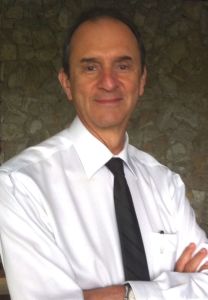
Dana Greene, PT, Dip MDT

Episode 44 - Dana Greene

Dana graduated from State University of New York at Buffalo in 1986 with a Bachelor of Science degree in Physical Therapy.  In 1990, he successfully completed the Diploma Program in Mechanical Diagnosis and Therapy at the McKenzie Institute International in New Zealand.  He was appointed to the teaching faculty of The McKenzie Institute, USA in 1992.   Since returning from New Zealand, he has limited his practice to the evaluation and treatment of mechanical spine disorders.   Dana co-owns and practices at Summit Physical Therapy in Syracuse, NY.


Show Notes

Personal Background

Born and raised in Niagara Falls New York. Married to Diane for 26 years and with whom he has two grown children, his daughter Allison and son Dana. He’s an avid golfer.


Professional Background

Graduated from University of Buffalo in 1986. Dana felt he didn’t know much of anything about treating patients with back pain. He spent time in in-patient and out-patient care. He was very ill- prepared to treat patients with spinal conditions or with chronic pain. He developed a poor appreciation for this new career and began a process to get out of it and get his MBA. He was influenced by Ron Schenk to take a McKenzie course and on his part A course he thought, “why haven’t I been taught this before.” He was impressed by his instructor Wayne Rath and soon took the remainder of the courses and then looked into doing the diploma program in New Zealand. His career developed into teaching over the next few years and ownership of a private practice.

Dana has experienced the difficulties common to owning and marketing a private practice and he elaborates on what he’s learned as effective means of growing a practice.


Quote

“There’s no genius in making simple problems complex.”

“The wheels of progress turn slowly.”


Time When Struggled

The frustration of practicing early on in one’s career is significant to Dana: You learn a thousand questions to ask the patient, you are taught 50 special tests marking plus and minus and then when you’re done you do the same thing to the patient. Every time he’d talk to people about a patient, they gave an explanation and described they “felt” certain things with the patient Dana would think, he didn’t really think they were wrong as much as he just didn’t believe them.

When Success Came

It was a gradual process and with each passing year he gets a bit better. He saw improvement each step but remembers after part C seeing noticeable improvement. As he stopped trying to force patients into being what he thought they were, as opposed to letting their reaction tell him he saw greater success.

To contribute:

Thanks for your support!

Episode 43 – José Liberato Jr., Part 2: Focus, Interest and Devotion in Mechanical Care

José Liberato Jr., PT, Dip. MDT

Episode 43 - José Liberato Continued

Show Notes

Primary Strengths

The main strength for José is the reliable assessment allowing us to identify responders and non-responders. And when we identify responders our ability to promote self care is a great strength. Our confidence in handling our patients is a principle characteristics that is a great strength.

A Memorable Patient Story

The first José mentions was at “the Lodge,” Robin McKenzie’s clinic, where he witnessed the first anterior derangement he had ever seen. Another experience was with a patient soon after José had first learned of centralization who had leg pain and responded well initially and he was so excited about the potential rapid changes that he couldn’t wait and did something I can’t say I know any other therapist who has done the same.

Patient Analogy

José uses many analogies like the cut knuckle and the cast on the leg and others we’ve heard prior. Another he uses for tissue dysfunction and the disorientation of tissue fibers and that they need time to be remodeled. He explains it is sort of like a dish of spaghetti that has each strand that is crossed and inter-woven and needs motion and tension to re-arrange the strands and help align them similar to how they were in the package originally.

Best Advice

José was told by his wife that, “If you want to quit your job and start it over again, you should do it now and you have my full support.” She said this regarding his interest in changing his emphasis from cardiac rehab to musculoskeletal. This helped José have the courage to change directions toward musculoskeletal patient care.

Doing Differently Now

Education is what he’s focusing more on now and emphasis on change of lifestyle is what he believes he is more skillful in.

Resources

MDT Conferences are one resource that is very valuable to José. The second is technology and websites with research studies. José believes Mechanical Care Forum is a fantastic addition where we can gain by hearing others’ experience.

Two books; The Patient’s Brain by Fabricio Benedetti and The Innovator’s Prescription by Clayton Christensen

Studies Influencing His Practice  

A prospective study of centralization of lumbar and referred pain. A predictor of symptomatic discs and annular competence.

Donelson R, Aprill C, Medcalf R, Grant W. Spine 1997 May 15;22(10):1115-22.

Does it matter which exercise? A randomized control trial of exercise for low back pain.

Long A1, Donelson R, Fung T. Spine 2004 Dec 1;29(23):2593-602.

The load. Davies C. Int’l J of MDT. 2008; Vol 2, No. 1:32-33.

Personal Habit Contributing to Success

José sees his experience in cardiac rehab as helpful. His organization and being objective contributes as well. The genuine interest he has in this field is also an important factor contributing to his success.  To reach José you can find him at:  liberato@mckenzie.org.br

To contribute:

Thanks for your support!

Episode 42 – José Liberato, Part 1: Changing Specialization After 20 Years

José Liberato Jr., PT, Dip. MDT

Episode 42 - José Liberato

Since graduating as a physiotherapist in 1973 from the Faculdade de Ciências Médicas de Minas Gerais, José specialized in cardiac rehabilitation. After a season with Robin McKenzie in New Zealand in 1991, he decided to “retire” from cardiac rehab and became the first PT to work with MDT in Brazil. In 1996, he founded and was appointed Chairman of the Brazilian branch of the Institute. In 1998 he obtained his Diploma in MDT, and in 1999 he was given the Dan Morgan Award of Excellence by the McKenzie Institute International. He has been an instructor at the McKenzie Institute Brazil since 2000 and works in his private practice in Belo Horizonte. In 2014 he was appointed member of the Regional Education Committee for the Americas.


Personal Background

José is married to Jada Liberato who now functions as the administrator of the Brazil chapter of the McKenzie Institute. José comes from a large family and was decided by his parents to be the “doctor” of the family. He lives in a state in Brazil in the center of the country that is known for mining.

Professional Background

Focused on Cardiac rehab for more than 20 years. José’s wife had dealt with back pain for a long time and upon applying the ideas from within the Treat Your Own Back book she improved rapidly. José was so impressed that he wrote Robin McKenzie to learn more. Robin share many articles and after further conversation José was invited to come to New Zealand to observe him in his clinic. He is very grateful for that experience and the things he learned there.

Quote

“Experience comes from intent, not just from passage of time.”

“Movement is remedy for mechanical pain.”

“When movement is helpful, we have deconditioning not lesion.” – Gary Jacobs, DC

Greatest Challenges

There are two basic obstacles. The main one is the current healthcare system which is money driven and based on profit. It prevents the widespread use of MDT because we are cost effective and we can significantly reduce the profit of the system. José believes we need to work hard to change the system.

The other obstacle is clinicians who are using the MDT system in an improvised manner achieving poor results. He believes students should trust the system and be persistent in their training.

To contribute:

Thanks for your support!