Episode 41- Hans Van Helvoirt, Part 2: Moving Beyond Biomedical

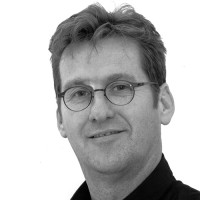
Hans van Helvoirt, MA, Dip MDT/MT

Episode 41 - Hans Van Helvoirt Continued

Show Notes

Struggles and Successes

Upon considering what caused him to struggle with helping patients, Hans acknowledges “I’m still struggling.” Now he realizes that his patient has to be in charge of his problem.

Learning more about communication and about being more aware of how we say things and not just what we say has helped.

Learning about inspiring coaching and provocative coaching is also revealing that struggles or success are not always from what we have done but what the patients has in his or her life outside the clinic.

To Hans the patient knows best. He has the truth inside him. Instead of thinking of himself as the important player, he views that he is just the translator for the patient. Hans suggests doing a course on motivational interviewing.

Greatest Challenges

The first thing we have to search for is, is the patient ready to address and take charge of the problem. He thinks about the old saying, If you teach a man to fish you feed him for a lifetime… but not every man likes fish! And patients don’t always like an active approach.

Hans admits he spends a lot of time at decatastrophizing back pain. He explains it’s just back pain. Patients are not going to die from it.

Hans doesn’t mean to trivialize the pain because many times it is very painful and limiting but he feels patients can lose a healthy perspective on it. Considering what people expect and want can help us deal with those issues first to better our chances of empowering them to take control of their problem. Dealing with the misconception that random exercise will fix the problem is another issue that becomes a challenge.

Our Primary Strength

The tools to handle these issues are inside the method. What we need to do better outside is explain the method to the outside world. And explain it as more than biomedical. We must be better communicators and move toward public health bringing our knowledge to the general public.

A Memorable Story (one that didn’t go so well)

Hans mentions a Part B course where a physician’s daughter presented who was apparently nervous and what happened upon beginning the repeated  movements had never happened to Hans before.

Best Advice

“Follow your feelings” Hans thinks of when he owned a private practice but had the opportunity to go to New Zealand and do the Diploma program and in spite of everyone discouraging him saying it was a bad time he went and feels that it has been one of the best decisions he’s made. The McKenzie Institute has provided so many chances to do important things and meet important people. He feels he needs to be brave and keep reading and gain more knowledge. That helps Hans speak to physicians and work with patients.

Doing Differently than 10 years ago

Doing much less. Listening more. What he says is very secure, meaning focused and specific.

Resources

Email groups where he can share and receive articles. One specific is Research Gate where you can follow certain researchers or topics. Also the Neuro Orthopedic Institute is a great resources for Hans.

Impactful Studies

One study that Hans believes everyone should read is:

A structured physiotherapy treatment model can provide rapid relief to patients who qualify for lumbar disc surgery: a prospective cohort study. Svensson

You can read the abstract here.

Personal Habit

Hans believes in the idea to “Make Happy Hormones Free” as he has heard from David Butler.

How that applies is that he makes specific effort to have fun with his patients and use humor to help improve his impact on his patients and his outcomes.

To contribute:

Thanks for your support!

Episode 40 – Hans Van Helvoirt, Part 1: A Journey with Expert Mentors and Developing a Dream Practice

Hans van Helvoirt, M.A., Dip MDT/MT

Episode 40 - Hans Van Helvoirt

Mr. Hans van Helvoirt graduated from the International Academy for Physical therapy in Utrecht, the Netherlands in 1986. In 1991 he finished his Manual Therapy Training in Bad Ragaz, Switzerland. In the early nineties he worked in private physical therapy practice focusing on spinal problems.  After completing the Diploma program in Wellington, New Zealand in 92, he started teaching MDT, first in the Benelux and later on in several European countries. In the mid nineties he did his Masters of Arts in Psychology. Hans is now working in a transdisciplinary setting in pain management in the Netherlands and is involved in different research projects focusing on combining MDT and anesthesiology.

Show Notes

Personal Background

Hans lives in Belgium but is from the Netherlands. He grew up on a farm in the south of the country which he feels privileged to have had that upbringing. Early on Hans thought he would go into sports training or coaching. Instead he chose physical therapy although he’s not sure why.

Professional Background

After his professional training it was required that he either go into military service or social service.

Hans spent some time working in a nursing home and while he didn’t feel he wanted to stay in that population working he still is glad he did that because of what he learned from them. He was more interested in private practice in orthopedics and pursued that environment.

Hans began Maitland manual therapy courses because he didn’t feel confident treating spine problems. He actually studied under Geoffrey Maitland for a few months and Hans was very impressed with him, especially in his listening skills.

When Hans finished, Mr. Maitland encouraged Hans to study McKenzie, Edwards and Mulligan. Hans pursued his diploma in manual therapy first and then took courses in Mechanical Diagnosis & Therapy. About that time David Butler came and taught in that area and Hans was asked to travel with him for one month to assist him on his courses. This was right before Hans travelled to Wellington, New Zealand to begin the Diploma program in the McKenzie Institute. Hans was impressed upon witnessing Robin McKenzie treat chronic pain patients and use self-care techniques which he felt he was missing.

Hans’ practice consisting of so many chronic pain patients and his interest in improving his skills interacting with the patient led him to complete a Master’s in psychology as well.

A Memorable Patient

Hans, while teaching a course was having trouble finding a patient to treat, was asked to see a physician’s patient, a young lady scheduled to have lumbar surgery in two days. Her response was surprising to the patient and his audience and even Hans. That experience opened many doors for his practice and business relationships since.  Hans is a partner in an interdisciplinary practice including manual medicine doctor, a rheumatologist, a neurologist, anesthesiologist and radiologist.

They have a CT scanner and MRI. The practice is built around the mechanical medicine doctor exam and the McKenzie assessment. Hans will be presenting additional data at the 13th International McKenzie Institute highlighting some of the work he’s been collecting in that practice.

A Relevant Quote

Upon spending time with Dr. Charles Aprill in New Orleans, Dr. Aprill told Hans,

“The MRI will tell the truth, nothing but the truth, but NOT the whole truth.”

Another quote Hans remembers is, “The tissue is not the issue.”

To contribute:

Thanks for your support!

Episode 39 – Mr. Jon Weinberg, Part 2: Working with Payers and Creating Quality Outcome Measurements

Jon Weinberg

USA | PT, Dip. MDT

Episode 39 - Mr. Jon Weinberg

Mr. Jon Weinberg graduated the Physiotherapy program at the Royal London School of Physiotherapy (UEL) with Honors in 1994. He has practiced in an Outpatient Orthopedic environment since 1996. After completing the Diploma program in 2005 Jon entered the Faculty training program and has been teaching since 2008 both in Israel and the US. He is currently actively involved in research and is in full time clinical practice at Team Care Physical Therapy a Certified McKenzie Clinic.

SHOW NOTES

Greatest Challenge

The willingness to take the step to go from being the practitioners to scientists. Measuring how effective we are is a critical step to improve our position and expect a better position in the market.  Jon views this as a matter of survival.  He explains first hand experience of how being more effective and efficient made it difficult to survive at the rate he was receiving at that time. He also elaborates on his experience in working with payers.

Jon gives key elements that he’d include in creating quality outcome measuring.

Memorable Patient Story

Jon recounts the experience with a patient who had 18 months of pain and initially responded well but her response changed and led to an outcome that Jon hasn’t forgotten about since.

Patient Analogy

Jon tries to make examples that fit the patient. Whether it’s an engineer and he gives an analogy of a bolt and washer and nut or using a burger moving between two buns or squeezing a balloon of toothpaste.

Best Advice

“Go out there and follow the evidence” which he learned from Mark Werneke.

Doing Differently

He says he’s gotten much smaller in what he needs.   Simplifying – he keeps it as simple as possible.

Resources

The McKenzie website and it’s resource page and colleagues within the institute are two more beneficial resources to Jon.

Important Studies

Donelson R, Aprill C, Medcalf R, Grant W.;   A prospective study of centralization of lumbar and referred pain. A predictor of symptomatic discs and anular competence. Spine; May 15;22(10):1115-22, 1997

Find it here.

Deutscher D, Werneke MW, Gottlieb D, Fritz JM, Resnik L.;  Physical Therapists’ Level of McKenzie Education, Functional Outcomes, and Utilization in Patients With Low Back Pain. JOSPT2014 Oct 29:1-40.

Find it here.

Personal Characteristic Contributing to Success

Enjoying what he does plays a large role in him being successful. Another is the ability to remove the unimportant information and get to the important.

Promoting Himself

Jon wishes to encourage all the listeners to begin collecting outcomes and invites anyone interested in learning more to contact him at jweinberg@nc.rr.com or (myself) Jason Ward.

To contact Jon you can reach him by email at jweinberg@nc.rr.com

To contribute:

Thanks for your support!