
Ted Dreisinger completed his masters and PhD in exercise physiology. He served in the United States Army from 1968-1971 as an air traffic controller, and is a Vietnam Veteran. Currently Ted serves as Chief Executive Officer for Therapy Advisors. Prior he was Vice President of Outcomes Management for Integrated Pain Solutions, a network of U.S. pain management providers. Previously to that he was Director of Research and Development spine centers in Detroit, Michigan, as well as holding executive and research positions at spine centers in Columbia, Missouri. He’s also worked as consultant, taught at the university level, and presented scientific papers both in the United States and abroad. Additionally Ted has published numerous articles in biomedical journals including Spine, Orthopedics, and The Journal of Cardiac Rehabilitation among several others. Dr. Dreisinger is a fellow in the North American Spine Society, the American Back Society, and the American College of Sports Medicine. His professional affiliations in addition to NASS include the American College of Sports Medicine (2002-2003) and the McKenzie Institute, USA. He is the current chair of the International Mechanical Diagnosis & Therapy Research Foundation and Secretary for the American Back Society.
Episode 25 - Ezekiel Gherscovici, Part 2: Linking the Assessment to the Treatment and “Keeping it Simple”

Ezequiel Gherscovici
Argentina | PT, Dip MDT
SHOW NOTES
Challenges
Through his training and influence in the Mechanical Diagnosis & Therapy Eze learned that the pay for service reimbursement model doesn’t lend itself well for efficient clinicians to be properly reimbursement for their expertise simply because so many modalities and techniques that are reimbursed are not necessary especially when patients are empowered through proper education.
The movement toward pay for performance anticipated in the future would be a component of the answer to improve this problem. Studies have been published stating significant numbers of major complications and even deaths occurring from medical error. As penalties begin to occur by payers to manage inefficiencies from providers, efforts to demonstrate excellence in musculoskeletal care through collected outcomes should be our immediate action.
Comparing the performance of clinicians would be a way for the public to be informed of the quality of the available care. One such resource to do so, related to hospital performance, is through the link below.
www.medicare.gov/hospitalcompare/search.html
Other immediate actions should include our educating elected officials and decision makers within our government to reveal our true value.
Strengths
Patient and provider safety is a key strength and should be better able to position us in our healthcare system. Progression of force beginning with patient force and only when indicated, the clinician generated forces, provides safety to the patient and the providing therapist.
A Memorable Story
Eze shares a patient story of a professional mixed martial art fighter and trainer. He presented as a typical patient and resolved well. An unexpected call from him surprised Eze and what followed was a twist to the story.
A Clinical Analogy
Ezequiel uses the analogy of a broken leg. He likens it to a simple derangement including tests that reveal the broken leg similar to our sub-classification, “setting” the fracture to reducing the derangement, cast the leg to our maintaining the reduction of the condition, gradual weaning from the supportive devices to recovery of function and ultimately to prevention of future episodes.
Best Advice
“Always Give Your Best.” No matter who you’re working with or what you’re working on, do your best.
A Resource I Wouldn’t Do Without
www.votervoice.net – Website to assist you in reaching out to your representatives and government decision makers in the USA. This can help us get our concerns related to improved mechanical care and reimbursement models to the appropriate people.
Recommended Studies
van Helvoirt, H. Transforaminal epidural steroid injections followed by mechanical diagnosis and therapy to prevent surgery for lumbar disc herniation.
To access the study click here.
Personal Habit Contributing to Success
Being well organized and prioritizing. His sophisticated software that helps him to do so is called… pen and paper!
If you have experience with public health efforts Eze and Colin Davies(Episodes 13 and 14) would welcome you to contact either of them.
To reach Eze his email is e_gherscovici@mckenziemdt.com.ar
We hope to deliver this content to the committed professional who wants to improve his/her care and we hope to do it in a way that is easily accessible, the world over, in today's technological age.
To contribute:
Give a 5-star review on iTunes;
Share EP #25 with a friend; and/or
Connect with us on the Spotify MCF Podcast and MCF Instagram page!
Thanks for your support!
Episode 24 - Ezekiel Gherscovici, Part 1: Lessons Learned from Family and Time with Brian Mulligan
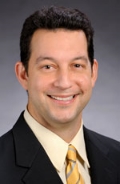
Ezequiel Gherscovici
Argentina | PT, Dip MDT
SHOW NOTES
Personal Background
Eze is married and together they are currently expecting their first child, a daughter. He was raised in Buenos Aires and he was greatly influenced by his grandfather. He remembers being encouraged always to continue to learn and to follow his dreams. He has trained in martial arts most of his life even becoming a national champion three consecutive years. His involvement in martial arts impacted his decision to pursue physical therapy.
Professional Background
Eze ended up pursuing Physical Therapy in Buenos Aires after initially anticipating going into orthopedics through medicine. He had special interest in prevention due to his involvement in martial arts and got involved in teaching and learning as much as he could from orthopedic surgeons. That led to his observation that PT’s were essentially not involved in research as far as he could identify. He was influenced by many well-known innovators in manual therapy and studied many of them. He received one particular invitation from Brian Mulligan to come and study under him. He learned about the importance of professional commitment with his patients as he consulted patients he left in Argentina while he went to New Zealand to study.
He was particularly impressed by the effectiveness and rapid nature of symptom and function improvements by Brian Mulligan using his techniques. His question remained as to the apparent gap of how he should identify which patients would respond rapidly and which wouldn’t. Upon him leaving Mulligan he remembers Brian encouraged him to take courses with Robin McKenzie and giving him a copy of Treat Your Own Back.
Currently he is pursuing a Masters in public health at USC, seeing patients through video consultation and advising some of his students of MDT by reviewing cases.
Quote
A meaningful quote to Ezequiel came from Robin McKenzie upon meeting him at the home office in New Zealand where he said,
“Keep it simple.”
Eze believes that the ability to keep it simple comes by being clear and that only comes through a deep understanding of the subject. Only then does simplicity become easy.
We hope to deliver this content to the committed professional who wants to improve his/her care and we hope to do it in a way that is easily accessible, the world over, in today's technological age.
To contribute:
Give a 5-star review on iTunes;
Share EP #24 with a friend; and/or
Connect with us on the Spotify MCF Podcast and MCF Instagram page!
Thanks for your support!