Episode 23 - Ron Bybee, Part 2: Lessons from a Guy from Down-Under Moving People the Wrong Way

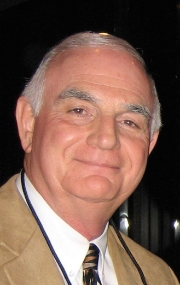
RON BYBEE

USA | PT, DPT, OCS, Dip. MDT

Episode 23 - Ron Bybee

SHOW NOTES

Strengths

 Simply put, it works – Ron says that it’s important that we become active and assertive to “get the word out.”

His Memorable Story

Ron gives the account of a man who was told he needed surgery for a disc herniation in his neck.  He persisted with very slow progress treating it for a few weeks and surgery was canceled and over additional weeks he fully recovered.

His Patient Analogy

He uses many of the well-known analogies including the bent-finger, cake of soap and filled donut.  One thing he does do is use a white board and make sketches to explain what he’s doing and why to further persuade the patient to improve the likelihood of a successful outcome.  

Best Advice

From a colleague, speaking of Robin McKenzie, he was told, “You ought to come and hear this guy from down-under who’s moving people the wrong way.”

Resources He Wouldn’t Do Without

The various journals and simply staying up on the scientific research are his most valued resource.

Impactful Research Studies

Any study looking at Centralization would be recommended reading by Ron.

Two specific studies

   Association between centralization and directional preference and functional and pain outcomes in patients with neck pain.

Found here or here

and

   Rapid resolution of chronic shoulder pain classified as derangement using the McKenzie method: a case series.

Found here and here

Personal Habit

Staying with it and persisting. It’s not always easy but because of its importance it’s worth it.

Promoting Ron

Ron invites all of us to get a copy and read Against the Tide, Robin McKenzie’s autobiography.  

Buy your copy from my affiliate link here

To reach Ron you can email him at rrbybee@q.com 

We hope to deliver this content to the committed professional who wants to improve his/her care and we hope to do it in a way that is easily accessible, the world over, in today's technological age.

To contribute:

Thanks for your support!

Episode 22 - Ron Bybee, Part 1: Listening to the Patient and Misunderstandings from Outsiders

Ron Bybee

USA | PT, DPT, OCS, Dip. MDT

Episode 22 - Ron Bybee

SHOW NOTES

Personal Background

Ron resides in Las Cruces, New Mexico and has been married for 48 years and has a large family with 3 children and 11 grandchildren. 

Professional Background

Practicing PT for 45 years he joined the Air Force early on and ended up practicing in the armed forces for 23 years. Ron spent 14 years as a professor.  He, along with Dana Greene were the first to undergo the diploma program in New Zealand.  He began with the McKenzie faculty in 1991 and also taught Part A and B to his students in the PT programs at which he taught.  He was involved with 20-some peer-reviewed studies,  of which many confirmed  of the McKenzie Method principles. 

Ron was introduced to the McKenzie method through colleague, Barbara Stone.  Ron took his first course with Robin McKenzie which impressed him because of the effects on the live patients that Robin treated on the course.  He continued to go to any course that he learned Robin was teaching.

Robin confronted Ron and said, “Either you’re an awfully slow learner or I’m a poor teacher.”

Ron assured Robin that he wanted to come because he learned something new from each patient he observed being treated. What impressed Ron the most with the McKenzie method, particularly in the military, was the quick response of many but the lack of response in others.  He was determined to apply the approach as purely as possible and when he did that his success rate went up immeasurably and he was convinced that he should apply the principles as accurately as possible.


Quote

Ron says a meaningful quote that has stuck with him came from Robin.  

“Listen to your patient.  They will usually tell you the key to resolving their mechanical problem if you will only listen to them.”

A lot of times, we as clinicians feel like we know how the patient evaluation goes, but Ron says that if we follow the form and allow the patient to answer the questions there, using open ended questions, you are more ready to go into the examination.

Greatest Challenge

Ron’s opinions on the greatest challenge comes from a misunderstanding as to what we do from those outside of the Institute.  He feels we need a greater involvement in other organizations and in contributing to the literature with studies and case studies.  The greatest misunderstanding is that McKenzie equals extension.  The best answer to that is that all patients within MDT will receive flexion at some point in their treatment.

Ron elaborates that we also need to go to further efforts to explain what we do to our patients to our referral sources to validate our role and support the importance of our assessment and delivered care.

Further effort to educate referring physicians is viewed as very important to Ron and should include their language and reveal that we’ve done a complete exam.  Ron believes that those of us trained in MDT aren’t always fully identifying the mechanical and symptomatic response with each movement.

We hope to deliver this content to the committed professional who wants to improve his/her care and we hope to do it in a way that is easily accessible, the world over, in today's technological age.

To contribute:

Thanks for your support!

Episode 21 - Gabor Sagi, Part 2

GABOR SAGI

France | PT, DO, Dip MDT

Episode 21 - Gabor Sagi

Show Notes to Come...

We hope to deliver this content to the committed professional who wants to improve his/her care and we hope to do it in a way that is easily accessible, the world over, in today's technological age.

To contribute:

Thanks for your support!