
Colin Davies is a licensed physiotherapist specializing in the assessment and treatment of common muscle and joint problems. After graduating in 1971, he became a clinical associate of Robin McKenzie, the founder of the McKenzie Method of musculoskeletal assessment and treatment. Colin Davies is one of the founder members of the McKenzie Institute. He has presented over 300 postgraduate courses to doctors, physiotherapists and chiropractors in eleven countries. He has also presented at international conferences around the world. Colin Davies has been the Chairman of the Scientific Committee at the Mckenzie Institute International Conference in Toronto, Ottawa, San Diego and Rio de Janeiro. He has been in private practice since 1979.
Episode 13 - Colin Davies, Part 1

Colin davies
Canada | Physiotherapist, Dip. MDT
SHOW NOTES
(by Jayla Hall)
(2:15)
Professional and Personal backgrounds
Colin Davies graduated from New Zealand School of Physiotherapy in 1971. In 1974, he worked as Robin McKenzie’s assistant for a year. Davies has been a member of the Teaching Faculty of the McKenzie Institute since 1984. He has presented over 300 courses for the McKenzie Institute in 15 countries. In addition to his teaching role, he is a member of the Board of Trustees of the McKenzie Institute International and an examiner for the Mckenzie Institute Diploma Program. He lives in Vancouver, Canada.
Davies was born in London, England before emigrating with his family to New Zealand at seven years of age. Davies is a husband, a father of two children, and a grandfather. Outside of the clinic, Davies runs recreational, hikes, and travels.
(5:30)
Meeting Robin McKenzie for the First Time
Quotes:
“I don't think I’ve ever met anyone who had such a presence. He had an air of authority.”
“I’m sure he would have said that he had his doubts, but he was a very self-assured individual, and he managed to [be confident] without any trace of arrogance.”
(7:35)
The Turning Point for Manual Therapy
The New Zealand Manual Therapy organization had just been initiated by Robin McKenzie and Brian Mulligan. These founders began offering courses on manual therapy of the spine and extremities based on Freddy Kaltenborn’s model.
Quote:
“If you were making an effort and were serious, [Robin] had time for you. He didn’t worry about the fact that you were taking time to understand [your] mistakes. If you persevered and showed [your resolution to learn], he’d do anything for you.”
(11:55)
The Early Formation of the McKenzie Institute
Initiating the McKenzie Institute in the United States of America, Robin McKenzie began lecturing his McKenzie courses nationally with the assistance of colleagues Colin Davies, Dan Kelly, Hugh Murray, Kathy Hoyt, Angelo DiMaggio, Wayne Rath, Greg Silva, Mark Laslett, Helen Clare, etc. to also instruct these courses.
(15:12)
What qualities were unique to Robin McKenzie, compared to other clinicians?
“There was a kind of insecurity about [other clinicians]. They would never admit that they didn’t know something. They would never admit that they were wrong. Their intent was to treat [patient conditions] by whatever their particular philosophy was.
In contrast, Robin was without bias when assessing a patient. It was just as important for [Robin] to [view] the patient, examine [him/her], and say ‘I don’t know what this is, but I know what it isn’t. This is non-mechanical; I can’t help you.’ To him, [this] was just as important as it would be to discover a mechanical problem.”
“[Robin] had the ability to think critically. He was never intimidated intellectually.”
“[Robin] would always challenge some idea or a diagnosis. He was always ready to trust his own judgment–back himself.”
(22:50)
How has the MDT assessment evolved since its conception?
Improved reproducibility and, thus, reliability of the assessment
(27:05)
Robin McKenzie’s Memorable Patient Stories
Davies remembers a female with a conspicuous cervicothoracic kyphosis who also presented with central pain in the neck and a loss of cervical extension. Robin prescribed regular exercises of cervical extension as her home program; and upon returning for the next visit, she described centralization and increased pain intensity. To Davies’ surprise, Robin advised the continuation of her home program.
Davies shares two more patient stories.
(35:35)
Quotes:
“In medicine, it’s usually not a case of not knowing; it’s a case of not looking.” –James Cyriax
“You look and you check. You don’t take things for granted. You’re not intimidated by the imaging studies [nor] the diagnosis. You look for yourself, and you check.” –Davies
(39:10)
What are the greatest challenges for conservative care clinicians? What should be our immediate action?
(41:20)
The Economical Impact of the MDT Assessment
Quote:
“The [McKenzie Method] has the potential to reduce the earnings of a lot of people. When you have a good mechanical evaluation, you don’t need the MRI in a lot of cases. You don’t need a lot of the injections that are being done. You don’t need a lot of the surgeries.”
Davies refers to the following research study:
Rosedale, R., Rastogi, R., May, S., Chesworth, B. M., Filice, F., Willis, S., Howard, J., Naudie, D., & Robbins, S. M. (2014). Efficacy of exercise intervention as determined by the McKenzie System of Mechanical Diagnosis and Therapy for knee osteoarthritis: a randomized controlled trial. The Journal of orthopaedic and sports physical therapy, 44(3), 173–A6. https://doi.org/10.2519/jospt.2014.4791
Sharing what Rosedale revealed to him with regard to the study, Davies repeats:
“Although 40% of the [patient] population was [classified as having derangements of the knee] and [were anticipated to have] a rapid response, many of [said patients] still insisted on and underwent surgery. In their minds, they were getting a brand new knee.”
Davies announces that MDT clinicians empower the patient and encourage patient independence, but this objective is only achieved if the patient is receptive to clinical guidance.
We hope to deliver this content to the committed professional who wants to improve his/her care and we hope to do it in a way that is easily accessible, the world over, in today's technological age.
To contribute:
Give a 5-star review on iTunes;
Share EP #13 with a friend; and/or
Connect with us on the Spotify MCF Podcast and MCF Instagram page!
Thanks for your support!
Episode 12 - Mark Miller, Part 2
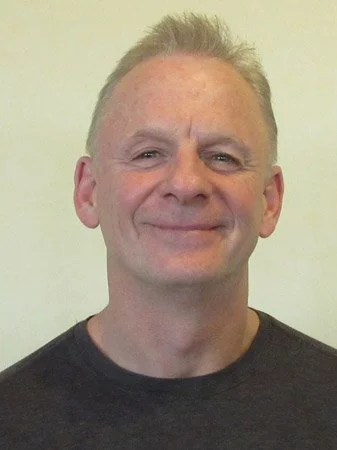
Mark Miller
USA | PT, Dip. MDT
SHOW NOTES
(by Jayla Hall)
Professional Background
Mark Miller, PT, Dip. MDT earned a 4-year degree in Human Kinetics from the University of Windsor (1984) prior to successfully completing a Bachelor of Physical Therapy from the University of Toronto (1987). In 1991, he obtained his diploma in Mechanical Diagnosis and Therapy (MDT) from the McKenzie Institute in New Zealand. Miller was then appointed to the Teaching Faculty for The McKenzie Institute (1992) and afterward promoted to Senior Faculty (1993) and International Faculty (1994). Mark has instructed more than a few hundred courses on the McKenzie Method to physicians, musculoskeletal care clinicians, and others in the USA, Canada, Brazil, Mexico and Norway.
Mark currently fulfills the role of President and Chief Clinical Officer for Integrated Mechanical Care (IMC) , a company designed to connect MDT-trained clinicians to prospective payers while maintaining MDT quality control, in Tallahassee, FL.
Personal Background
Mark Miller was born and raised in Canada. Upon pursuing a college education, Miller joined the Ministry of Northern Affairs (the American equivalent of the U.S. Army) given his low socioeconomic background; and the organization established the basis of his early professional training. He is also husband to Halley and a father to two sons, Cole and Drew.
(1:20)
Psychosocial Drivers of Pain and Disability Dominating Present Mechanical Drivers
Quotes:
“The beauty of the MDT assessment is [that] it rapidly determines for you what is dominating the clinical situation.”
“A patient may have a mechanical problem, but the situation [may also be] dominated by the psychosocial factors.” –Miller
Upon determining the primary influencing factor of the clinical presentation, the conservative care clinician is tasked with (1) identifying what the patient consequently requires and (2) figuring out how to provide the appropriate means to satisfy or meet the patient’s need(s).
“When you recognize that [psychosocial factors] are dominating the clinical picture, address [this point] early [into the patient’s care], and leave the mechanical piece out for a visit or two, [then] you will find that [the patients to whom this issue applies] do very, very, very well.” –Miller
Miller proposes that, in order to render the appropriate services for the patient, the mechanical care clinician must form alliances with other health professionals whose scope of practice is relevant to the individuality of the patient and his/her drivers.
The patient may, thus, be referred to another professional who is more equipped to address the patient’s psychosocial drivers; or the mechanical care clinician can create an environment that is suitable to addressing such drivers.
(6:35)
Memorable Patient Stories
Quotes:
“I think everybody with pain…deserves the right to a reliable assessment, and that’s what MDT gives them.” –Miller
“Don’t let anything bias you towards what you think you’ll find. Let it be what it is, and let it present itself.” –Miller
“[Generally,] it’s the assessment that should make all the decisions.” –Miller
(13:00)
Clinical Analogies for MDT Principles
(14:35)
What’s the best advice you’ve received, as it pertains to your professional career?
The following quotes incite the concept of life-long learning:
“Never believe you fully understand it. Never believe you’ve got this thing figured out.” –Miller
“I’ve never stopped learning from patients.” –Miller
(18:05)
Impactful Research Studies for MSK Clinical Decision-Making
Long, A., Donelson, R., & Fung, T. (2004). Does it matter which exercise? A randomized control trial of exercise for low back pain. Spine, 29(23), 2593–2602. https://doi.org/10.1097/01.brs.0000146464.23007.2a
Long, A., May, S., & Fung, T. (2008). Specific directional exercises for patients with low back pain: a case series. Physiotherapy Canada. Physiotherapie Canada, 60(4), 307–317. https://doi.org/10.3138/physio.60.4.307
Donelson, R., Aprill, C., Medcalf, R., & Grant, W. (1997). A prospective study of centralization of lumbar and referred pain. A predictor of symptomatic discs and anular competence. Spine, 22(10), 1115–1122. https://doi.org/10.1097/00007632-199705150-00011
(21:37)
Are there any areas in which you would prefer to see research studies published?
Quotes:
“The research that needs to be done is not so much of ‘My method’s better than their method’ or ‘My exercise is better than their exercise’... What really has to be done is we have to compare clinical outcomes using agreeable indices. Then we have to [consider] the costs to society if those outcomes aren’t [or] are achieved.” –Miller
“I’ve sat in boardrooms of fortune 500 companies. The one message that they convey is unanimous: they don’t leave the United States because they can find cheaper labor elsewhere; they leave because they can no longer afford the healthcare.”
“If [the literature] doesn’t [inquire into this issue], then a lot of clinicians…are going to be left behind and a lot of patients are not going to [attain necessary therapeutic objectives].” –Miller
(24:35)
Integrated Mechanical Care (IMC)’s Mission and Next Steps
We hope to deliver this content to the committed professional who wants to improve his/her care and we hope to do it in a way that is easily accessible, the world over, in today's technological age.
To contribute:
Give a 5-star review on iTunes;
Share EP #12 with a friend; and/or
Connect with us on the MCF Website and MCF Instagram page!
Thanks for your support!